$6.5 Billion U.S. Appliance Build-Out Cuts 1,200 Miles Per Shipment
A $6.5 billion U.S. manufacturing blitz is turning appliances into data-driven products built within 500 miles of their buyers, according to internal figures released Tuesday by the Midwest-headquartered producer.
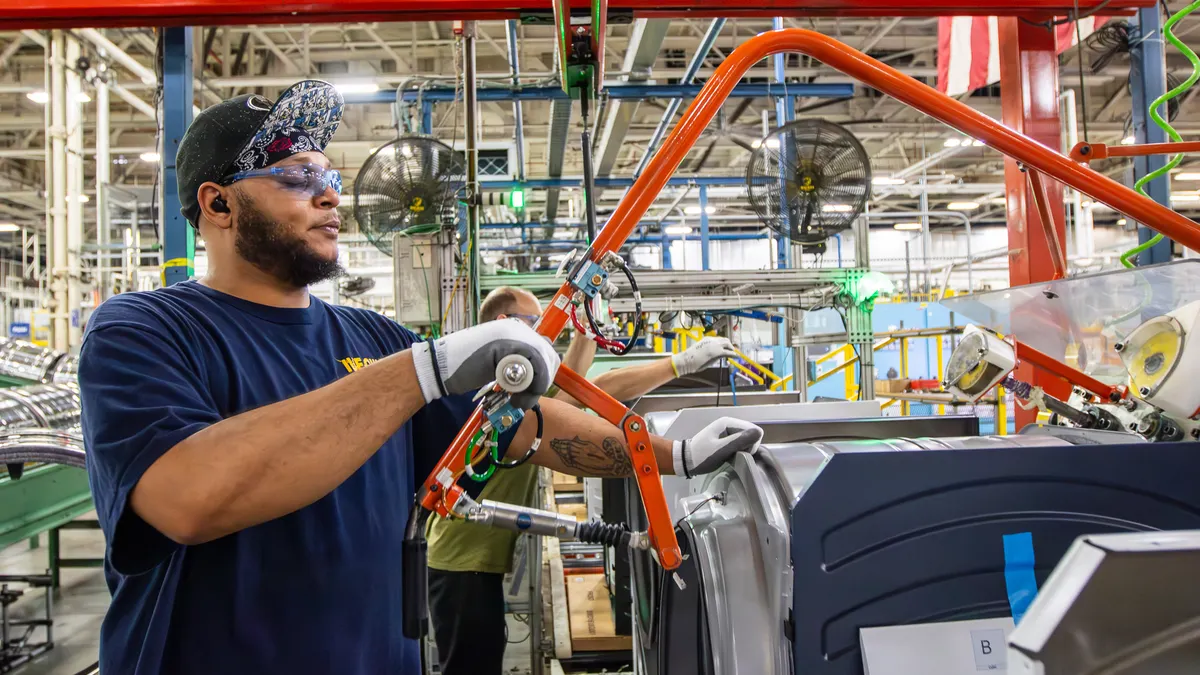
$6.5 Billion Bet on U.S. Production
Rather than chase lower wages overseas, the company—whose washers, dryers, and refrigerators reach one in three American homes—has poured $3.5 billion into domestic stamping, welding, and final-assembly halls since 2016 and has board approval for another $3 billion through 2029. The average product now travels 1,200 fewer miles than in 2015, trimming four days off delivery time and erasing an estimated 23,000 tons of annual CO₂ tied to intercontinental freight.
Automation Cuts Labor Below Two Hours Per Unit
Inside the newest Ohio stamping plant, 14-story roll-form towers shape galvanized steel for refrigerator doors at 210 panels per hour with zero manual handling. Across the aisle, 42 six-axis robots weld, glue, and rivet cabinets in 72-second takt cycles; the same jobs needed 5.6 labor hours in 1998. Today’s total “touch labor” for a top-load laundry pair stands at 1.9 hours, a drop of more than 50 percent that offsets U.S. wage premiums and shifts skilled workers to programming and maintenance.
Real-Time Data Keeps Plants Under 5% Downtime
A decade-long digital retrofit threaded 28,000 sensors into presses, paint booths, and torque guns. The mesh streams temperature, vibration, and cycle counts to an in-house cloud that pings crews when a bearing climbs three degrees above baseline, letting them intervene during scheduled changeovers. Unplanned outages have fallen from 15–20% of scheduled hours in 2012 to below 5% last quarter—equal to gaining 11 extra production days a year at each site.
Autonomous Haulers Replace Forklift Convoys
The firm’s material-handling playbook is being rewritten from the floor up. Self-driving tugger trains now move 1,800 loads daily between the parts supermarket and final-assembly lines at the Tennessee cooking-products park, cutting internal transit time 38%. A pilot fleet of driverless yard trucks shuttles finished pallets to an adjacent warehouse without human input, a step toward on-road hauls that could erase 120 short-haul tractor trips per week by 2025.
Blueprint for Copycat Reshoring Programs
Executives who toured the facilities told Logistics Today that any manufacturer eyeing a similar pivot should budget seven-to-ten cents of every revenue dollar for automation and cloud architecture, sequence rollouts by product volume (highest first), and lock in fixed-price robotics contracts before inflation indexes reset. They also warn that domestic talent pools remain shallow: the company now sponsors mechatronics degrees at three community colleges to feed its technician pipeline.
Sources: Company release; Logistics Today